
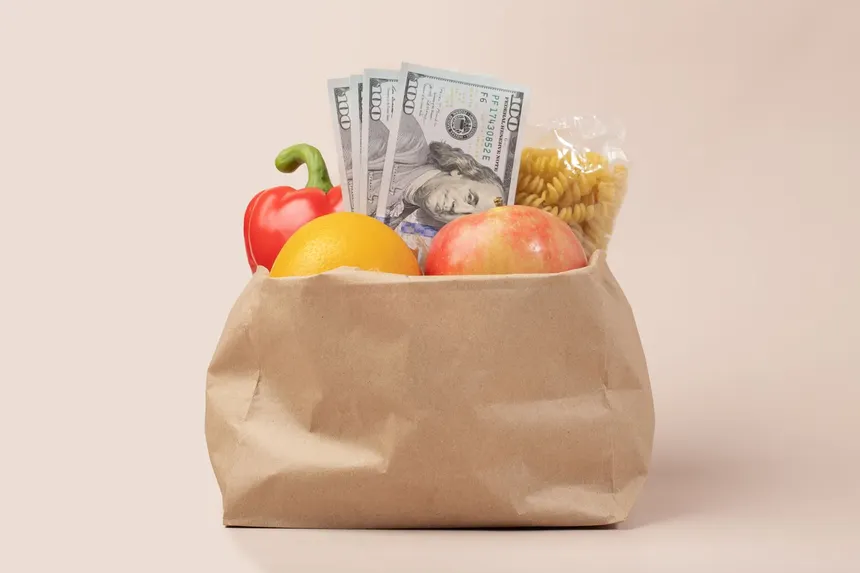
Today we gonna lern a very useful skill: saving money on grocery shopping! Let’s be honest: walking into a grocery store lately feels a bit like entering a high-stakes poker game where the house always wins. You walk in for a gallon of milk and a loaf of bread, and somehow you walk out $60 poorer with a bag that feels suspiciously light. Between the sneaky psychology of store layouts and the relentless climb of food inflation, the checkout counter has become a major source of “budget anxiety” for most of us.
But here’s the secret the big chains don’t want you to know: you have way more control over that total than you think.
Learning how to save money on grocery shopping isn’t about living on bland canned beans or clipping coupons for three hours every Sunday morning. It’s about outsmarting the system. It’s a shift in strategy—moving from “reactive” shopping (grabbing whatever looks good while you’re hungry) to “proactive” shopping.
In this guide, we’re going to break down the exact tactics you can use to slash your grocery bill by 30% or more without sacrificing the quality of the food you put on the table. From the “pantry audit” you should be doing before you even leave the house to the hidden math on the shelf tags, we’re turning your next food run into a masterclass in frugality.
Ready to keep more of your paycheck and less of the “convenience tax”? Let’s dive in.
The Battle is Won at Home: The Pre-Trip Strategy
Most people think the “saving” starts when they walk through the automatic sliding doors, but if you wait until you’re staring at the organic kale to make a decision, you’ve already lost. The most effective way to save money on grocery shopping actually happens in your pajamas, right in your own kitchen.
1. The Power of the “Pantry Audit”
Before you even touch a grocery list, you need to play detective. We all have that “black hole” in the back of the pantry—the three cans of chickpeas, the half-empty bag of quinoa, or the jar of marinara sauce that’s been chilling there since the holidays.
Shopping your own kitchen first prevents the “duplicate buy,” which is one of the biggest silent killers of a budget. When you know exactly what you have, your grocery list becomes a tool for completing meals rather than just hoarding ingredients.
2. Reverse Meal Planning
Traditional meal planning tells you to pick a recipe and then buy the ingredients. If you’re trying to be frugal, that’s backwards. Instead, try Reverse Meal Planning:
- Check the circulars: Look at what’s on loss-leader status (those crazy-cheap deals on the front page of the store app).
- Build around the sale: If chicken thighs and bell peppers are 50% off, you’re having stir-fry or sheet-pan fajitas this week.
- Shop your inventory: If you found those chickpeas during your audit, add a head of cauliflower to the list and make a curry.
3. The “If-Then” Grocery List
We’ve all heard the advice to “stick to the list,” but a rigid list can actually backfire. If your list says “broccoli” but it’s $4.99 a head and green beans are on clearance for $0.99, the rigid shopper loses money.
Write your list with flexibility in mind. Use categories like “Green veg (whatever is on sale)” or “Protein for Tuesday (under $5/lb).” This gives you the psychological permission to pivot to the better deal once you’re in the aisles.
4. Never Shop on an Empty Stomach (or an Empty Mind)
It sounds like a cliché, but the “hunger tax” is real. When your blood sugar is low, your brain’s impulse control weakens, and suddenly those $6 artisanal crackers look like a basic necessity. Pair a full stomach with a clear plan, and you become the most dangerous person in the store: a shopper who knows exactly what they want and exactly what they refuse to overpay for.
In-Store Tactics: Outsmarting the Supermarket
Now that you’ve got your plan, it’s time to step into the “arena.” Grocery stores are meticulously designed by experts whose entire job is to make you spend more than you intended. From the smell of rotisserie chicken at the entrance to the candy bars at the exit, it’s a gauntlet of psychological triggers.
To keep your budget intact, you have to learn how to see through the marketing fluff.
1. Look Up and Look Down
Supermarkets treat shelf space like prime real estate. The most expensive, high-markup name brands are strategically placed at eye level—it’s called “the buy zone.” If you want the deals, you have to be willing to do a little gymnastics.
The budget-friendly store brands and bulk options are almost always tucked away on the very bottom or the very top shelves. Make it a habit to scan the entire vertical section before you reach for the first thing you see.
2. The “Unit Price” is Your Secret Weapon
Retailers love to use “fuzzy math” to make a deal look better than it is. A “2 for $7” tag looks great, but if a single larger container is $3.25, the “deal” is actually costing you more.
Ignore the big, flashy numbers and look at the tiny print on the shelf tag: the unit price. This tells you exactly how much you’re paying per ounce, pound, or sheet. This is the only way to truly compare a “Family Size” cereal box against the standard one. Sometimes the bigger box is a steal; sometimes, it’s just more cardboard for a higher price.
3. Shop the Perimeter (Mostly)
The edges of the store are where the “real” food lives: produce, meat, dairy, and eggs. The middle aisles are the “processed zones,” filled with boxed goods that have higher profit margins and lower nutritional value.
Try the 80/20 Rule: Spend 80% of your time and budget on the perimeter. Only venture into the “inner maze” for specific staples like coffee, spices, or dry beans. The less time you spend wandering through aisles of colorful packaging, the fewer “oops” items end up in your cart.
4. The “Generic” Truth
There is a massive stigma around store brands, but here’s a little insider secret: many generic products are manufactured in the exact same facilities as the name-brand versions, just with a different label.
For things like flour, sugar, salt, canned veggies, and frozen fruit, the quality difference is often zero. Start by swapping out one or two name-brand items for store brands each week. If you can’t taste the difference, you’ve just given yourself a permanent raise.
5. Be Wary of “Convenience Taxes”
Every time a store does work for you, they charge you for it. Pre-cut melon, bagged salads, and shredded cheese are significantly more expensive than their “whole” counterparts. You are essentially paying a high hourly wage to a machine to chop your onions for you. If you have ten minutes and a sharp knife at home, keep that “tax” in your own pocket.
Strategic Food Choices: Choosing the “What” to Save on the “How”
Once you know where to look on the shelves, you need to decide what actually goes into your cart. Not all calories are created equal when it comes to your bank account. To truly master the art of saving money on grocery shopping, you have to identify the “budget anchors”—those reliable, low-cost items that keep your total bill from drifting into the triple digits.
1. The Plant-Based Pivot
You don’t have to go full vegan to save money, but treating meat as a “side dish” or a “flavoring” rather than the main event is a financial game-changer.
- The Math: A pound of organic ground beef can run you $8–$10; a pound of dried lentils or black beans is often under $2 and provides just as much protein and fiber.
- The Hack: Try “halving” your meat consumption by mixing a pound of ground meat with a cup of cooked lentils or finely chopped mushrooms. It stretches the meal to double the servings, and most people won’t even notice the difference in texture.
2. Frozen is the New Fresh
There is a common myth that “fresh is best,” but when it comes to your wallet (and often nutrition), frozen wins.
- The Benefit: Frozen fruits and vegetables are picked at peak ripeness and flash-frozen, locking in vitamins.
- The Savings: Because they are shelf-stable for months, you aren’t racing against a ticking clock. You stop “throwing money in the trash” when that bag of spinach turns into a slimy mess in the crisper drawer after three days. Plus, you can buy the generic frozen bags for a fraction of the price of “off-season” fresh produce.
3. Bulk Buying: A Double-Edged Sword
Buying in bulk can be a massive win, but it’s also where many budgets go to die.
- The Green Light: Stock up on non-perishables and high-use items like rice, oats, coffee, olive oil, and toilet paper. These have a long shelf life and the unit price savings are undeniable.
- The Red Light: Avoid “bulk-buying” experimental items. If you’ve never tried a specific brand of 5-pound kale salad, don’t buy it just because it’s a “deal.” If you throw half of it away, your price per serving just doubled.
4. Follow the Sun (Shop Seasonally)
Nature has a built-in discount system. When strawberries are in season in the summer, they are cheap and delicious because the supply is high. When you try to buy them in January, you’re paying for the “shipping tax” to fly them across the world.
- Pro-Tip: If you see a produce item at a rock-bottom price, buy extra and freeze it. Blanched peppers, berries, and even onions freeze beautifully for future soups and smoothies.
5. Don’t Overlook the “Ugly” Produce
Many stores now have a section for “imperfect” produce—carrots that are a little crooked or apples with a tiny bruise. These are often marked down by 50% or more. Once they are chopped up in a stew or blended in a smoothie, they look exactly like the “perfect” ones, but they taste like a bargain.
Leveraging Technology and Rewards: The Digital Advantage
In the old days, “saving money on grocery shopping” meant sitting at the kitchen table with a pair of scissors and a stack of Sunday newspapers. Thankfully, we’ve moved past the era of paper cuts. Today, the most savvy shoppers use their smartphones as a high-tech shield against high prices.
1. The “Stacking” Strategy
The real pros don’t just use one discount; they layer them. This is known as stacking, and it works like this:
- The Store Sale: You buy a box of pasta that’s already on sale for “Buy One, Get One” (BOGO).
- The Digital Coupon: You clip a $1.00 off coupon within the store’s official app.
- The Rebate App: After you get home, you scan your receipt into an app like Ibotta or Fetch for an extra $0.50 cash back. By the time you’re done, that pasta was essentially free.
2. Loyalty Programs: More Than Just a Phone Number
Most grocery stores have a loyalty program, but most shoppers only use it to get the “sale price” at the register. If you dig a little deeper into the store’s app, you’ll often find personalized offers. These apps use your shopping history to give you deep discounts on things you actually buy. If you buy almond milk every week, the app will eventually throw you a “Member Only” coupon for it. It takes thirty seconds to check before you walk in, and it can save you five to ten dollars per trip.
3. The “Anti-Impulse” Benefit of Grocery Pickup
Here is a counter-intuitive tip: Paying a $5 pickup fee might save you $50. When you shop in-store, you are vulnerable to every end-cap display and bakery smell. When you shop via an app for pickup or delivery:
- You see a running total in real-time before you hit “checkout.”
- You can easily delete items if you see you’ve gone over budget.
- You aren’t tempted by the “Ooh, that looks good” factor of the snack aisle. If you’re a chronic impulse buyer, staying out of the physical store entirely is the ultimate budget hack.
4. Use “Scan-as-you-Shop”
Many modern supermarkets now offer handheld scanners or mobile apps that let you scan items as you put them in your cart. This is a game-changer for budget awareness. Instead of the “Register Roulette” (where you hold your breath as the cashier rings everything up), you know your exact total to the penny at every moment. If you hit your $100 limit and you still have three items on your list, you can make an informed decision right there in the aisle about what to put back.
5. Cashback Credit Cards (With a Warning)
If—and only if—you can pay off your balance in full every single month, using a credit card that offers 3% to 6% cashback on groceries is like getting a permanent discount on your food. However, if you carry a balance, the interest will immediately wipe out any savings. Know your spending personality before choosing this tool.
Post-Shop: Reducing Waste to Save Cash
You’ve navigated the aisles, successfully dodged the impulse buys, and made it home under budget. Congratulations! But the mission isn’t over yet. The most expensive groceries you’ll ever buy are the ones you end up throwing away.
In the United States, the average family tosses out nearly 25% of the food they buy. That is the financial equivalent of taking a $100 bill and flushing it down the toilet every single month. To truly save money on grocery shopping, you have to treat your kitchen like a high-efficiency warehouse.
1. The “Eat Me First” Bin
This is a low-tech hack with high-impact results. Designate a small bin or a specific shelf in your fridge for items that are nearing their “expiration” date—that half-used jar of pesto, the softening bell pepper, or the yogurt that expires tomorrow. By making these items the first things you see when you open the door, you eliminate the “hidden science project” that usually happens in the back of the crisper drawer.
2. Master the Art of Food Storage
Most people store their food incorrectly, which fast-tracks spoilage. A few simple tweaks can double the life of your groceries:
- Berries: Wash them in a diluted vinegar bath (one part vinegar, three parts water) to kill mold spores, then dry them thoroughly before refrigerating.
- Greens: Place a dry paper towel inside your bag of spinach or lettuce to absorb excess moisture.
- Herbs: Treat cilantro and parsley like a bouquet of flowers—trim the stems and put them in a glass of water.
- Potatoes and Onions: Keep them away from each other! Onions release gases that make potatoes sprout faster.
3. The Freezer: Your Financial “Pause” Button
The freezer is essentially a time machine for your budget. If you realize you aren’t going to get to that loaf of bread or that pack of chicken before it turns, freeze it immediately.
- Scrap Bags: Keep a gallon-sized freezer bag for veggie scraps (onion ends, carrot peels, celery tops). Once it’s full, simmer it with water for free, high-quality vegetable stock.
- Brown Bananas: Never throw them away. Peel them, toss them in a bag, and they become the base for smoothies or “free” banana bread later.
4. Transformation, Not Just “Leftovers”
The word “leftovers” sounds unappealing to many, which is why food gets wasted. Instead, think in terms of component cooking.
- Sunday’s roasted chicken becomes Monday’s chicken salad and Tuesday’s chicken noodle soup.
- Monday’s extra rice becomes Tuesday’s fried rice. By reinventing the ingredients rather than just microwaving the same plate three days in a row, you keep your palate happy and your wallet full.
5. Respect the “Best By” Date
One of the biggest scams in the food industry is the “Best By” date. In most cases, these are not safety dates; they are the manufacturer’s estimate of peak quality. Use your senses—if the milk smells fine, the eggs sink in water, and the canned goods aren’t dented or bulging, they are likely perfectly safe to eat. Don’t let a printed date dictate your budget.
Conclusion: Turning Savings into a Sustainable Habit
At the end of the day, learning how to save money on grocery shopping isn’t a one-time event—it’s a lifestyle shift. It’s about moving away from the “convenience culture” that encourages us to spend mindlessly and moving toward a more intentional, empowered way of eating.
If you try to implement every single tip in this guide by next Monday, you might feel overwhelmed. Instead, treat it like a menu. Pick two or three strategies that feel doable for you right now. Maybe this week you simply commit to a “Pantry Audit” and swapping three name-brand items for the store version. Once those become second nature, layer on the digital coupons or the “Eat Me First” bin.
The Big Picture
Remember why you’re doing this. That $40 or $50 you save every week might not feel like a fortune in the moment, but over a year, that’s over $2,500. That is a vacation, a significant dent in a high-interest credit card, or the beginning of a solid emergency fund.
Your grocery bill is one of the few “variable” expenses in your budget that you can change immediately. You can’t usually call your landlord and demand lower rent today, but you can absolutely walk into a supermarket and decide not to pay the “convenience tax.”
Your Next Steps:
- Audit: Go look in your freezer and pantry right now. What’s hiding in the back?
- Plan: Find three items you already have and build one “free” meal around them this week.
- Execute: Head to the store with a list, a full stomach, and a eagle eye for those bottom-shelf deals.
Saving money doesn’t have to mean eating less; it just means shopping smarter. You’ve got the toolkit—now go win your next trip to the checkout counter!


Leave a Reply