
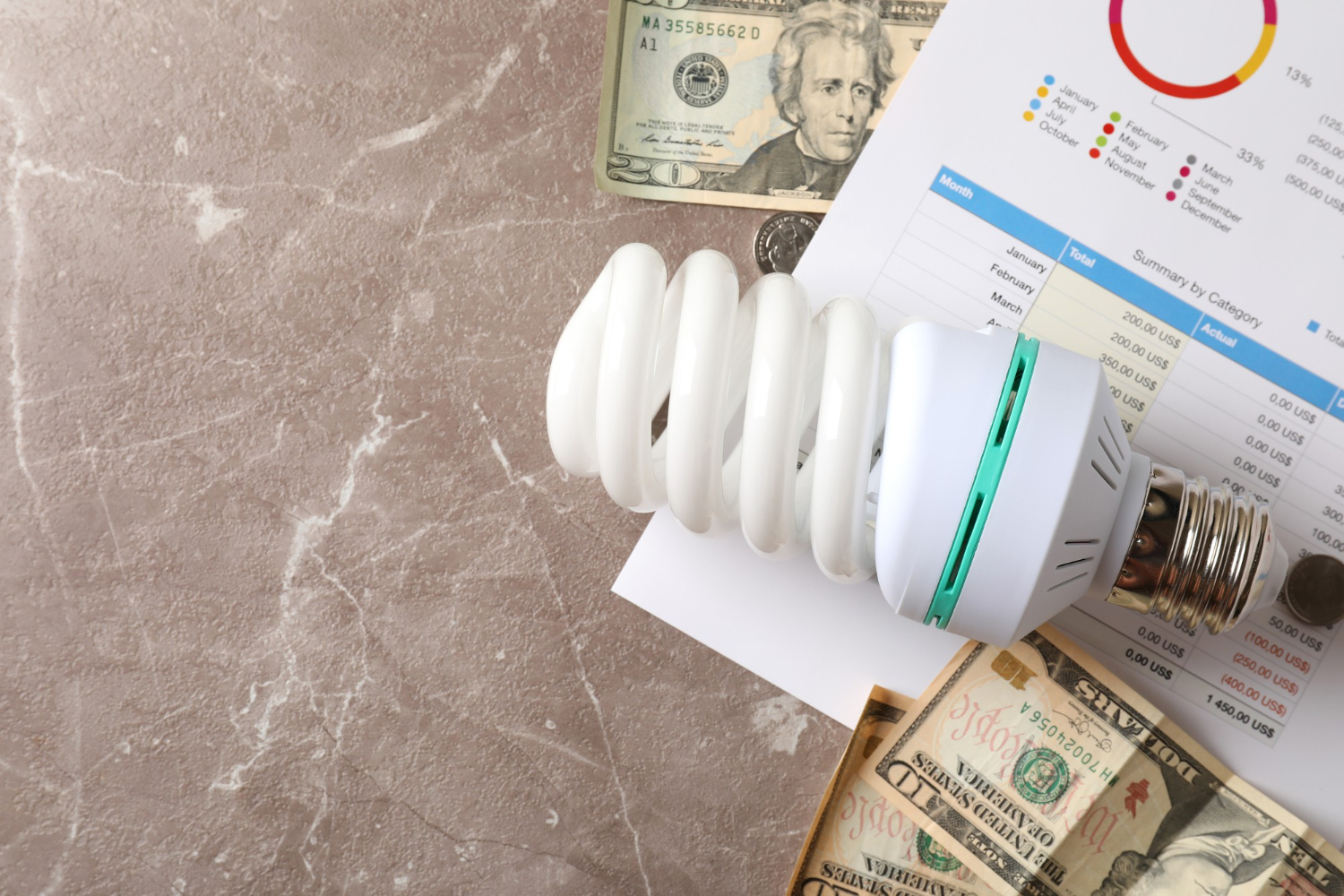
I still remember the exact moment I opened my utility statement last January. My jaw practically hit the floor.
Seeing a number that high felt like a punch to my carefully planned budget—like I was literally throwing my hard-earned cash out the window just to keep the house comfortable. As someone who tracks every dollar and loves optimizing my personal finances, I knew I couldn’t let this slide. I desperately needed to figure out exactly how to save money on light bill expenses without forcing my family to sit sweating in the dark.
That massive statement was my ultimate wake-up call. I decided to treat my home’s energy consumption like a strict financial audit. I spent weeks researching and testing every method possible to lower my electricity bill. I didn’t want to just shave off a few cents; I wanted a sustainable, long-term strategy to permanently reduce my power bill month after month.
The good news? It completely worked.
By implementing a mix of free daily habits, hunting down sneaky energy vampires that were quietly draining my outlets, and applying some highly effective energy-saving tips, I managed to keep an extra $500 a year in my pocket (which went straight into my investment portfolio, naturally).
If you are tired of dreading your monthly statement and want to take back control of your wallet, you are in the right place. Here is the exact, step-by-step strategy I used to slash my energy costs, and how you can do the same starting today.
The “Free and Instant” Phase: What I Did on Day One
As a finance nerd, my favorite kind of ROI (Return on Investment) is the kind that requires zero upfront capital. When I first started researching how to save money on my light bill, I ignored the expensive solar panel pitches and smart home overhauls. Instead, I focused entirely on behavioral changes—things I could do today for free.
Here are the three zero-cost habits I implemented on day one that yielded immediate results:
Adjusting the Thermostat (The 2-Degree Rule)
I used to be guilty of blasting the air conditioning the second I felt a little warm, treating my living room like a walk-in refrigerator. But heating and cooling make up the largest chunk of the average home’s energy usage.
I instituted what I call the “2-Degree Rule.” In the summer, I bumped my thermostat up by exactly two degrees from my usual setting. In the winter, I dropped it down by two degrees. Honestly? After about 48 hours, my body completely adjusted, and I barely noticed the difference in temperature. But I definitely noticed the difference on my next bill. The Department of Energy estimates you can save about 1% on your bill for every degree of adjustment per eight hours, meaning this tiny tweak alone was a massive win for my monthly budget.
Mastering Natural Light and Window Treatments
I stopped relying on my HVAC system to do all the heavy lifting and started using my windows strategically. I realized my house was acting like a greenhouse in the summer, trapping heat and forcing my AC to work in overdrive.
- Summer Strategy: Before I leave the house for work, I aggressively close the blinds and pull the blackout curtains on south- and west-facing windows to block out the harsh afternoon sun.
- Winter Strategy: I do the exact opposite. I throw open all the curtains in the morning to let the sunlight naturally (and freely!) warm up my living spaces, closing them right as the sun goes down to add an extra layer of insulation against the cold glass.
The Strict “Full Load” Policy
Appliances like your dishwasher and washing machine use roughly the same amount of electricity (and water) whether you are washing three plates or thirty. Running half-empty loads was essentially me paying a premium for impatience.
I put a hard stop to it and established a strict “100% Capacity” rule in my house. The dishwasher only runs when not a single extra spoon can fit. The washing machine is only turned on for full baskets.
To compound those savings, I also switched 90% of my laundry to cold water. Heating the water actually accounts for the vast majority of the energy your washing machine consumes. Modern detergents are formulated to work brilliantly in cold water anyway, so my clothes get just as clean, and my power bill shrinks a little bit more every wash day.
Hunting Down the “Energy Vampires”
Once I had my daily habits dialed in, it was time to address the silent leaks in my budget. In the personal finance world, we call small, unnoticed expenses “latte factors.” In the electricity world, they are called energy vampires.
An energy vampire is an electronic device or appliance that continuously draws a small amount of power even when it is turned off or in standby mode. If it has a digital clock, a glowing standby light, or a bulky charging block, it is sipping electricity 24/7. Experts estimate that these phantom loads can account for up to 10% of a home’s monthly energy use. To me, that felt like paying a 10% tax for absolutely zero benefit.
Identifying My Worst Offenders
I went on an audit around my house, hunting down anything that was plugged in but rarely used. I was shocked by what I found.
My biggest culprits included:
- The Guest Room TV: It was plugged in 365 days a year but used maybe two weekends a year.
- The Coffee Maker: Sitting on the kitchen counter, using electricity all day just to display the time (which I never looked at anyway).
- Laptop and Phone Chargers: Left dangling in the wall socket long after my devices were fully charged and packed away in my bag.
- The Entertainment Center: My TV, soundbar, and gaming console were constantly in “rest mode,” waiting to be turned on in a fraction of a second.
The Smart Power Strip Solution
At first, I tried manually unplugging things. Let me tell you, reaching behind the TV every single night got old very fast. I needed an automated, frictionless solution.
I decided to spend a little bit of money to save a lot. I bought a few smart power strips and started grouping my electronics. For example, my TV, gaming console, and soundbar all went onto one strip. Now, when I am done watching Netflix for the night, I just hit the master switch on the power strip, and it completely cuts the circuit to all three devices.
It completely eliminated the phantom load from my living room with zero extra effort on my part. Stopping these energy vampires was one of the easiest ways I learned how to save money on my light bill without sacrificing an ounce of convenience.
Low-Cost Upgrades That Gave Me the Best ROI
In personal finance, we talk a lot about ROI—Return on Investment. Sometimes you have to spend a little money upfront to secure long-term, compounding savings. Once I maximized my free habits, I allocated a small budget (less than $50) to make my house more energy-efficient.
These low-cost upgrades paid for themselves in just a few months and have been driving my utility bill down ever since.
The Great LED Bulb Swap
I admit, I was holding onto a few old, incandescent lightbulbs simply because they weren’t burnt out yet. But from a financial standpoint, keeping them was a massive liability. Incandescent bulbs waste about 90% of their energy as heat, not light!
I went to the hardware store and bought a multi-pack of energy-efficient LED bulbs. Yes, they cost a few dollars more upfront, but they use up to 75% less energy and last 25 times longer. I swapped out the highest-traffic areas first—the kitchen, the living room, and my home office. The math on this is undeniably good: the bulbs paid for themselves by my second electricity bill, making it one of my absolute favorite energy-saving tips.
Sealing the Leaks (The $10 Fix)
You wouldn’t leave your front door wide open while the air conditioning is running, right? Well, if your doors and windows have drafts, that is essentially what you are doing. I realized my expensive, climate-controlled air was literally seeping out through the cracks.
I spent about $10 on a roll of weatherstripping and a simple draft dodger for the bottom of my front door. It took me maybe 15 minutes to install. Sealing up those tiny leaks meant my HVAC system didn’t have to cycle on nearly as often to maintain my target temperature, which was a huge win in my ongoing mission to reduce my power bill.
Replacing Air Filters Religiously
I used to be terrible at remembering to change my HVAC air filters. I would let them go for six months, eventually pulling out a filter that looked like it was wearing a thick fur coat.
What I didn’t realize was that a clogged filter severely restricts airflow, forcing the blower motor to work twice as hard to push air through the house. That extra strain requires significantly more electricity. Now, I treat my air filters like a non-negotiable recurring bill. I set a calendar reminder on my phone to swap them out every 60 to 90 days. A clean filter costs around $15, but it keeps my system running at peak efficiency, preventing expensive mechanical breakdowns and ensuring I never overpay on my utility statement.
Understanding Peak Hours (How I Outsmarted the Utility Company)
Once I had physically optimized my home, I turned my attention to the actual contract I had with my energy provider. In finance, timing the market is usually a bad idea—but when it comes to electricity, timing is exactly how you win.
I called my utility provider and discovered they offered a “Time-of-Use” (TOU) billing plan. Under this structure, electricity isn’t a flat rate. Instead, they charge a massive premium during “peak hours” (usually between 4:00 PM and 8:00 PM, when everyone gets home from work, blasts the AC, and turns on the oven). Conversely, power is heavily discounted during “off-peak” hours (late at night and early in the morning).
Shifting My Schedule for Instant Arbitrage
I opted into the TOU plan and treated it like a daily arbitrage opportunity. I simply shifted my home’s heavy lifting to the cheapest hours.
- I started setting my dishwasher on a delay timer so it only runs after midnight.
- I shifted my laundry days to Sunday mornings or late on weekday nights.
- I run the pool pump exclusively during the deepest off-peak night hours.
By simply changing when I consumed power, rather than reducing how much I consumed, I saw a steep drop in my costs. It was the ultimate hack to lower my electricity bill without sacrificing a single comfort.
Summary: My Monthly Savings Breakdown
Treating my energy usage like a strict budget category paid off exponentially. While every house is different, here is a rough breakdown of how these energy-saving tips translated into cold, hard cash for my household:
| Energy-Saving Strategy | Estimated Monthly Savings |
| The 2-Degree Thermostat Rule | $12.00 |
| Cold Water & Full Laundry Loads | $8.00 |
| Defeating Energy Vampires (Smart Strips) | $10.00 |
| LED Swap, Weatherstripping & Clean Filters | $15.00 |
| Off-Peak TOU Scheduling | $15.00 |
| Total Estimated Savings | $60.00 / month ($720 / year) |
Disclaimer: Your exact numbers will vary based on your home size, climate, and local utility rates, but the underlying math applies universally!
That is an extra $60 a month that I was previously just handing over to the power grid. Instead of letting lifestyle creep steal those savings, I set up an automated transfer to funnel that exact amount straight into an index fund within my brokerage account. Thanks to compound interest, the money I saved on electricity is now actively building my long-term wealth.
Conclusion
Figuring out exactly how to save money on light bill expenses is not about making yourself miserable, shivering in the winter, or sitting in the dark. It is about being intentional with your resources, plugging the hidden financial leaks, and making your home operate efficiently.
Just like paying off debt or building an investment portfolio, lowering your overhead costs is a marathon. By implementing small, zero-cost habits, investing in a few smart upgrades with great ROI, and refusing to pay peak pricing, you can permanently reduce your power bill and keep more of your own money working for you.
Pick just one or two of these strategies to implement this week, and watch your next monthly statement shrink. Take control of your thermostat, audit your outlets, and start treating your home’s energy efficiency like the powerful financial tool it is.



Leave a Reply