

In an era of relentless notifications and rising costs, frugal and simple living has evolved from a niche lifestyle choice into the ultimate modern power move. We’ve all felt that specific 2026 brand of burnout—where your “convenient” digital subscriptions are quietly draining your bank account and your “time-saving” gadgets are just adding to the physical clutter of your home. But what if the secret to a richer life wasn’t about working more to buy more, but about strategically needing less?
Frugality is often misunderstood as a life of deprivation, but in reality, it’s about intentionality. It is the art of directing your hard-earned resources toward what actually brings you joy while ruthlessly cutting out the “lifestyle creep” that keeps so many people stuck on the proverbial hamster wheel. When you pair a frugal mindset with the principles of simple living, you aren’t just saving money; you’re reclaiming your time and your headspace.
Whether you’re looking to crush your debt, build a “freedom fund,” or just breathe a little easier in a crowded world, this guide will show you how to master the art of the intentional less. Let’s dive into how you can start living larger by shrinking your footprint.
What is Frugal and Simple Living?
Before we dive into the “how-to,” we need to clear up a common misconception. Many people hear the words frugal and simple living and immediately think of barren rooms, scratchy sweaters, and never eating at a restaurant again.
In reality, this lifestyle is about efficiency. It’s the philosophy of maximizing the utility of every dollar and every hour so you can spend them on what truly matters to you.
Frugality vs. Being Cheap: There’s a Massive Difference
One of the biggest barriers to entry is the fear of being “that person”—the one who splits a $2 tip six ways. But being frugal isn’t about being cheap.
- Being Cheap is about the price. It’s choosing the lowest possible cost, even if it means a lower quality product, a poor experience for others, or a “disposable” item that will end up in a landfill in three months.
- Being Frugal is about value. It’s about spending $100 on a pair of boots that will last ten years rather than $30 on a pair that will last one season. It’s about saying “no” to the mediocre so you can say a resounding “yes” to the exceptional.
Simple Living vs. Minimalism
While these terms are often used interchangeably, they represent two different sides of the same coin.
- Minimalism is primarily about the physical. It’s the practice of owning fewer things. It’s the “less is more” aesthetic that clears your physical environment to clear your mind.
- Simple Living is a broader lifestyle philosophy. It’s about “slow living”—reducing the complexity of your schedule, your commitments, and your digital life. You can be a minimalist who lives a very high-paced, complex life, but simple living encourages you to downshift the engine entirely.
The Power of “Decision Fatigue”
Why are we seeing such a massive surge in the frugal and simple living movement in 2026? It’s because of decision fatigue.
Every day, we are bombarded with thousands of micro-decisions: Which toothpaste should I buy? Which streaming service should I keep? Should I upgrade my phone plan? By simplifying your lifestyle and adopting frugal habits, you automate these choices. When your default answer to “do I need this new gadget?” is “no,” you save a significant amount of mental energy, energy you can then pour into your career, your family, or your hobbies.
Pro-Tip: If you’re feeling overwhelmed, don’t try to overhaul your entire life in a weekend. Frugality is a muscle; you have to build it. Start by auditing just one category like your kitchen or your recurring subscriptions and feel the immediate relief of a simpler “system.”
The Financial Pillars of Frugality
Adopting a lifestyle of frugal and simple living isn’t just about cutting coupons; it’s about restructuring your relationship with money. In 2026, where “one-click” purchases and hidden micro-subscriptions are everywhere, you need a solid defensive strategy.
Here are the three pillars that will help you build a bulletproof financial foundation.
1. Intentional Spending and the 72-Hour Rule
The biggest enemy of a frugal lifestyle is the impulse buy. Modern marketing is designed to trigger a dopamine hit the moment you see a “Limited Time Offer.”
To combat this, we use the 72-Hour Rule. If you see something you want—that isn’t a basic necessity—you must wait three full days before hitting “purchase.” Usually, the dopamine fades, and the “need” disappears with it. This is the core of intentional spending: buying because an item adds genuine value to your life, not because an algorithm told you to.
2. Auditing Your “Digital Leaks”
In the mid-2020s, “lifestyle creep” has gone digital. Between AI productivity tools, premium streaming tiers, and cloud storage fees, most people have $50–$200 a month “leaking” out of their accounts without them even noticing.
- Action Step: Open your banking app and look at every recurring charge from the last 30 days.
- The Frugal Filter: Ask yourself, “If I had to sign up for this today at full price, would I?” If the answer isn’t a “Hell yes,” it’s a cancel.
3. The Power of Compound Savings
Frugality is often seen as “small potatoes.” People think, “Why bother saving $5 on a coffee?” But frugal and simple living is built on the math of small wins. When you redirect those small savings into a high-yield account or a low-cost index fund, you trigger the most powerful force in finance: Compound Interest.
To see the real-world impact, let’s look at the formula for compound interest:
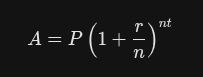
If you save just $200 a month (by cutting out two dinner deliveries and a few subscriptions) and invest it at a 7% annual return compounded monthly ($n=12$), in 10 years, you would have approximately $34,600.
That is the difference between a “simple” life and a stressed one—that $34k is your “Freedom Fund.”
Frugal Hack: Swap one “paid” hobby for a “free” one this month. Instead of a $75 yoga studio membership, try a high-quality YouTube instructor and a park session. You get the same health benefits with zero overhead.
Transitioning into frugal and simple living isn’t just about what’s in your wallet—it’s about what’s in your calendar and your closet. If your finances are the “engine” of this lifestyle, your daily habits are the “steering wheel.”
Here are five practical ways to downshift and find more peace in your day-to-day routine.
5 Ways to Simplify Your Daily Life
1. The “One-In, One-Out” Rule
Physical clutter is a visual representation of “spent” money. To maintain a simple environment, adopt this rule: for every new item that enters your home, one must leave (via donation, sale, or recycling). This stops the cycle of mindless consumption and keeps your space—and your mind—clear.
2. Meal Planning for the Modern World
In 2026, grocery prices fluctuate more than the stock market. Meal planning is the ultimate frugal defense. Instead of asking “What’s for dinner?” at 6:00 PM when you’re tired and prone to opening a delivery app, decide on Sunday.
- Focus on “Theme Nights”: (Taco Tuesday, Soup Sunday) to make grocery lists repetitive and predictable.
- Bulk Buy Staples: Rice, beans, and frozen veggies are your best friends for low-cost, high-nutrition meals.
3. Radical Digital Minimalism
Your smartphone is a portal for advertisers to reach your wallet. Simplify your digital life by:
- Deleting Shopping Apps: If you have to log in via a browser, you’re less likely to “doom-spend.”
- Turning Off Non-Human Notifications: If a real person didn’t send it, you don’t need a buzz in your pocket.
- Cleaning Your Home Screen: Keep only the essentials (Calendar, Notes, Camera).
4. The Capsule Wardrobe
Decision fatigue is real. The average person wears 20% of their clothes 80% of the time. By curate-ing a “capsule wardrobe”—a small collection of high-quality, versatile pieces—you save money on “fast fashion” and save time every single morning.
5. Embracing “Slow Hobbies”
We often spend money because we are bored. Frugal and simple living encourages “slow hobbies” that cost very little but offer high fulfillment.
- Examples: Gardening, hiking, reading (use the library!), journaling, or learning a new language via free apps. These activities provide a “flow state” that scrolling social media never will.
Comparison: Complex vs. Simple Living
Sometimes you need to see the “before and after” to realize how much weight you’re carrying. Here is how a few small shifts can change your entire lifestyle:
| Area of Life | The “Complex” Way | The Frugal & Simple Way |
| Dining | Frequent Takeout & Delivery | Meal Prepping & Home Cooking |
| Housing | Upsizing for “Status” | Right-sizing for Comfort |
| Transport | High Monthly Car Payments | Reliable Used Cars or Biking |
| Mindset | “I need more to be happy.” | “I have enough to be free.” |
| Free Time | “Shopping as a hobby.” | “Creating as a hobby.” |
Simple Living Hack: Before you buy any “organizing” bins or fancy shelving, declutter first. You cannot organize your way out of having too much stuff, and the cheapest storage solution is simply owning less.
Frugality Meets Sustainability: The 2026 Trend
In 2026, frugal and simple living has become the ultimate form of environmental activism. When you stop buying things you don’t need, you aren’t just saving money—you’re reducing your carbon footprint and taking a stand against the “throwaway culture” that has dominated the last decade.
The “Buy It For Life” (BIFL) Movement
Frugal enthusiasts have pivoted away from “fast” everything—fast fashion, fast furniture, and fast tech. Instead, they embrace the BIFL (Buy It For Life) philosophy. It’s better to spend $200 on a blender that has a 20-year warranty than $40 on one that will end up in a landfill by next Christmas.
Repair Over Replace
Simple living encourages us to regain the “lost arts” of maintenance. Whether it’s patching a pair of jeans, replacing a phone battery yourself, or learning basic woodworking to fix a chair, the act of repairing connects you to your possessions. It transforms you from a passive consumer into an active steward of your resources.
Common Pitfalls to Avoid
Even with the best intentions, the journey toward frugal and simple living has its traps. If you want to make this a lifelong habit rather than a “three-week fad,” watch out for these common mistakes:
- Pitfall #1: The “False Economy”: This happens when you buy something just because it’s cheap. Buying a $2 t-shirt that shrinks and warps after one wash is more expensive in the long run than buying a $20 quality shirt. Frugality is about cost-per-use, not just price.
- Pitfall #2: Frugal Fatigue: If you cut your budget too deep, too fast, you will eventually “rebound-spend” out of sheer frustration. Think of it like a crash diet. It’s better to make small, sustainable changes than to try to live on rice and beans in a dark house for a month.
- Pitfall #3: Social Comparison (The “Joneses” 2.0): In 2026, we don’t just compare ourselves to our neighbors; we compare ourselves to filtered influencers. You might feel “behind” because your home doesn’t look like a minimalist museum. Remember: simple living is about your peace, not an aesthetic for Instagram.
- Pitfall #4: Extreme Deprivation: If you stop doing everything that brings you joy (like your morning coffee or a monthly movie night) just to save a few dollars, you’ll lose the “why” behind your journey. Frugality should fund your life, not replace it.
Pro-Tip for 2026: Use AI tools to your advantage! There are now incredible apps that can scan your pantry and suggest recipes based on what you already have, preventing food waste and saving you a trip to the store. Frugality in the digital age is about being “tech-smart,” not just “penny-wise.”
We’ve reached the end of the roadmap, but for you, this is where the real journey begins. Embracing a life of frugal and simple living is more than just a way to survive an expensive year—it is a quiet rebellion against the “more is better” narrative that keeps us stressed and stretched thin.
By choosing value over price, quality over quantity, and peace over prestige, you aren’t just saving money. You are buying back your time. You are creating a “buffer” between you and the unexpected turns of life. In 2026, that buffer is the ultimate luxury.
Remember, there is no “perfect” way to be frugal. Some days you’ll master your meal prep and save every penny; other days, you’ll choose convenience because your mental health needs it. Both are okay. The goal isn’t perfection—it’s intentionality.
Your 24-Hour Challenge
Don’t let this be just another article you read and forget. To kickstart your journey, I challenge you to do one of the following in the next 24 hours:
- Cancel one “ghost” subscription you haven’t used in 30 days.
- Declare a “No-Spend Day” for tomorrow (no gas, no groceries, no online shopping).
- Declutter one “hot spot” in your home, like a junk drawer or your desktop, to reclaim some mental space.
What’s Your First Move?
I want to hear from you! Which part of frugal and simple living feels the most challenging to you right now? Is it the social pressure to spend, or the struggle to declutter your digital life?
Drop a comment below and let’s swap tips. Your idea might be exactly what someone else needs to hear to get started!



Leave a Reply