
I still remember the “sticker shock” I felt standing in the drugstore aisle back in 2023, staring at a four-pack of five-blade cartridges priced at nearly thirty dollars. It felt like I was paying a monthly subscription fee just to have a smooth face. As someone who prides myself on finding the best ROI in every corner of my budget, I realized that my morning routine was a massive leak in my finances.
That’s when I fell down the rabbit hole of wet shaving.
If you’re tired of the “disposable” culture and the astronomical cost of shaving with modern cartridges, you’re in the right place. I swapped my plastic multi-blade for a double-edge (DE) safety razor, and it was easily the best frugal pivot I’ve made in years. Not only did I get a closer shave, but I also watched my annual spending on blades drop from $200 down to about $15.
In this guide, I’m breaking down the most affordable shaving razor options available in 2026. We’ll look at the initial investment versus the long-term savings, why the “old-school” way is actually the future of budget-conscious grooming, and how you can get a barbershop-quality shave for pennies. If you’ve been asking yourself, “Are safety razors actually cheaper?” or “What is the best budget razor for sensitive skin?” I’ve got the answers (and the receipts) to prove that being frugal doesn’t mean settling for a subpar shave.
The Math of Shaving: Safety Razor vs. Cartridge
When I first started tracking my expenses, I realized that “small” recurring costs were the silent killers of my savings account. Shaving was at the top of that list. To truly understand why switching is the ultimate frugal move, you have to look at the cost of shaving per year.
Most of us were raised on the “razor and blades” business model: the company gives you the handle for cheap (or free) and then “taxes” you for the rest of your life with overpriced refills. By switching to a double-edge (DE) safety razor, you flip the script. You pay a bit more for the handle once, and then your “refill tax” drops by about 95%.
Here is a breakdown of what I found when I crunched the numbers for 2026 pricing:
Shaving Cost Comparison Table (Annual Estimates)
| Razor Type | Initial Handle Cost | Cost per Refill | Annual Blade Cost* | Total Year 1 Cost |
| Premium Cartridge | $15.00 | $4.50 – $6.00 | ~$145.00 | $160.00 |
| Disposable Razors | N/A | $1.50 – $2.50 | ~$100.00 | $100.00 |
| DE Safety Razor | $25.00 | $0.10 – $0.25 | $15.00 | $40.00 |
*Assumes one blade/cartridge change per week.
The “Break-Even” Point
When I bought my first safety razor, I spent about $35 total (a $20 handle and a $15 bulk pack of 100 blades). At the time, I was spending roughly $20 a month on those fancy five-blade cartridges.
Frugal Win: I broke even in just seven weeks. Every shave after that was essentially “free” compared to my old routine.
By Year 2, my only expense was the occasional $15 pack of blades that lasts me over a year. While my friends are still dropping $150+ annually at the drugstore, I’m putting that money into my high-yield savings account. It’s not just about the money, though—it’s about the fact that I’m no longer a “subscriber” to a brand’s overpriced plastic.
Are you ready to see which specific tools I recommend to get these numbers for yourself?
Top Picks: The Most Affordable Shaving Razors for 2026
If you’re ready to stop lighting money on fire at the drugstore, you need a handle that’s built to last. I’ve tested dozens of setups, and in 2026, these are the best budget safety razors that balance cost, durability, and a clean shave.
A. The Best Overall Value: Weishi Nostalgic (or Baili BD179)
For under $20, you can get a chrome-plated, “butterfly-open” safety razor that will likely outlive your car.
- Why I love it: The “Butterfly” mechanism makes changing blades incredibly easy (and safe). It’s a “mild” razor, which is perfect if you’re a beginner worried about nicks.
- Price: Usually found for $15–$18 on Amazon or specialty shaving sites.
B. The “Reliable” Mainstream Choice: King C. Gillette
If you’re hesitant about buying a brand you’ve never heard of, the King C. Gillette Double-Edge Razor is available at almost every major retailer for about $30–$35.
- My Experience: It’s a bit heavier than the Weishi, which is actually a good thing. You want the weight of the razor to do the work, not your hand. It’s a high-quality “entry-level” investment that feels premium without the luxury price tag.
C. The Frugal “Hybrid”: The Leaf Shave
This is the “Tesla” of frugal shaving. It looks like a modern cartridge razor but uses standard 10-cent double-edge blades (you just snap them in half).
- The ROI: It’s pricey upfront ($80+), but because it uses the cheapest blades on earth, it’s the most affordable option for head shaving or people who want the pivoting-head feel without the “Gillette tax.”
The Real Secret to Frugal Shaving: The 10-Cent Blade
Here is where the “Pro” in Pro SEO Writer and Frugal Living Enthusiast really comes out. The handle is a one-time purchase, but the blades are where the wealth is built (or lost).
When I was using cartridges, I was terrified of changing the blade because I knew every click of a new cartridge was $5 gone. Now? I change my blade every three days because it costs me pennies.
My Top Bulk Blade Recommendations:
- Astra Superior Platinum (Green): These are my “Goldilocks” blades. Sharp enough for a thick beard but smooth enough for sensitive skin. In 2026, you can grab a 100-pack for roughly $12–$15. That’s enough to last the average person two years.
- Derby Extra: These are even cheaper (often under $10 for 100), though they are a bit “milder.” If you have very fine hair, these are the ultimate budget win.
- The “Sampler” Hack: Don’t commit to 100 blades yet! Every face is different. Spend $8 on a DE Blade Sampler Pack first. It’s the most frugal way to avoid buying a bulk pack of blades that might irritate your specific skin type.
Pro Tip: I keep a “blade bank” (an old broth can with a slit in the top) to safely store used blades. Once it’s full, I recycle the whole thing. It’s the ultimate sustainable, low-cost solution.
Wet Shaving: It’s Not Just About the Razor
I used to think those $8 cans of “ultra-moisturizing” gel were necessary. They aren’t. In fact, they’re mostly air and chemicals that can actually dry out your skin.
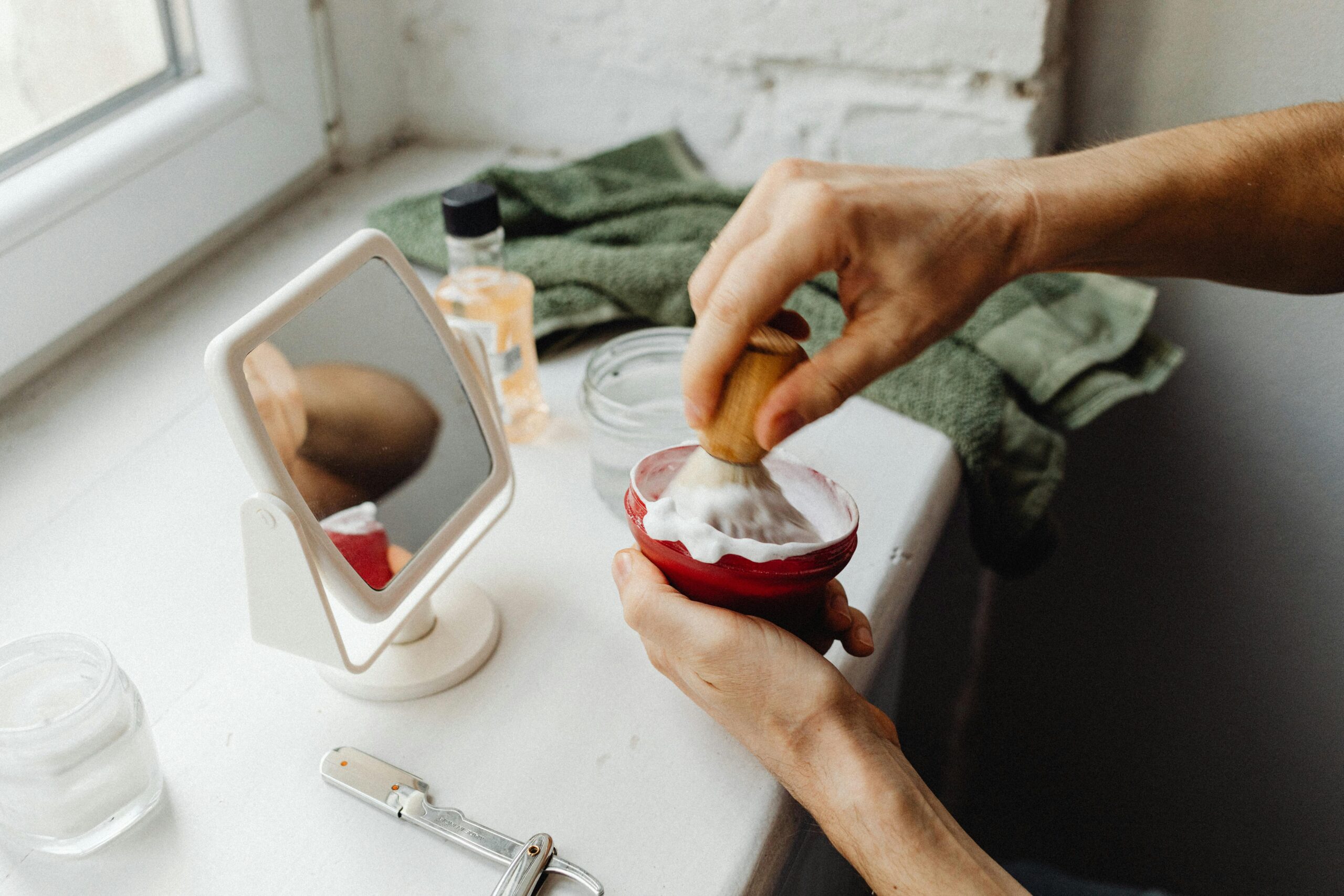
To truly master affordable shaving, you have to look at your lather. I switched to a synthetic shaving brush ($10–$15) and a hard shaving soap like Arko or Proraso.
- The Math: A $5 stick of Arko shaving soap lasts me 6 months. A $9 can of gel lasted me three weeks.
- The Result: A richer, warmer lather that lifts the hair, making your cheap 10-cent blade perform like a $50 professional shave.
Frequent Questions:
Are safety razors actually cheaper? Yes. While the handle (the razor) costs $20–$35 upfront, the blades cost roughly $0.12 each. Compare that to $4.00–$6.00 per cartridge, and the safety razor pays for itself within 2–3 months.
Is wet shaving better for sensitive skin? In my experience, absolutely. Most irritation comes from dragging 5 blades across your skin when only 1 is needed. A single, sharp safety razor blade reduces “blade buffing” and helps eliminate razor burn and ingrown hairs.
Conclusion: Stop Paying the “Shaving Tax”
Frugality isn’t about deprivation; it’s about choosing where your money goes. I’d rather spend that $200 a year on a weekend getaway than on plastic cartridges that end up in a landfill.
Switching to a double-edge safety razor was one of those rare “win-win-win” scenarios: it’s better for my wallet, better for my skin, and better for the planet. If you’re ready to start, grab a Weishi or a King C. Gillette, pick up an Astra sampler, and join the “old-school” shaving revolution. Your bank account will thank you.
What do you think? Are you ready to ditch the cartridges, or do you have a budget-friendly shaving hack I missed? Let me know in the comments!


Leave a Reply